
The Ear–Brain Connection
Hearing & Brain Health: Why We Look at Both
Hearing is often thought of as a function of the ears alone, but in reality, it is a brain-based process. Your ears collect sound, but it is your brain that organizes it, filters background noise, and turns it into meaningful information — conversation, music, laughter, and connection.
When hearing becomes unclear, even subtly, the brain has to work harder to keep up. Many people don’t notice this as “hearing loss” at first. Instead, they notice fatigue after conversations, difficulty following speech in noisy environments, or feeling less confident participating in discussions at work or with family.
At our Houston office, we view hearing not just as sound detection, but as a key part of how the brain functions and how people stay engaged in their lives.
Why Hearing and Brain Health Are Connected
Changes in hearing increase listening effort — the amount of mental energy required to understand speech. Over time, this added strain can affect more than just communication.
Patients may experience changes in:
- Energy during conversations or meetings
- Focus in complex listening environments
- Confidence in social or professional settings
That’s why modern hearing care looks beyond volume alone. Thoughtful hearing care considers how hearing clarity, brain processing, and daily life interact — especially for adults who value staying sharp, active, and connected.

What Is Cognitive Screening?
Cognitive screening is a brief, non-invasive way to understand how the brain processes information such as reaction time, attention, and processing speed.
It is not a diagnosis. Instead, it provides a snapshot of how the brain is functioning at a given point in time — similar to how a blood pressure reading offers useful information without diagnosing heart disease.
In a hearing care setting, cognitive screening helps us better understand listening effort and supports more personalized, informed care.
Why We Pair Cognitive Screening With Hearing Testing
Because hearing and cognition work together, looking at both provides a more complete picture.
Pairing hearing evaluation with cognitive screening allows us to:
- Better understand listening effort and mental fatigue
- Personalize hearing care recommendations
- Establish baseline information to monitor changes over time
Our goal is clarity and confidence — helping life feel easier, not labeling or alarming.
This integrated approach is especially valuable for adults seeking private, comprehensive hearing care in Houston that goes beyond a basic hearing test.
Our Philosophy
Hearing care is part of whole-body wellness.
At McNamara Hearing, we focus on how you hear, think, communicate, and stay connected to the people and activities you love. Our approach is personalized, unrushed, and designed to support long-term quality of life.
Cognitive Screening: Common Questions
Is cognitive screening a dementia test?
No. Cognitive screening does not diagnose dementia, Alzheimer’s disease, or memory disorders. It is a screening tool designed to provide general information about how the brain is processing information.
Why am I being offered cognitive screening at a hearing appointment?
Hearing and cognition are closely connected. When hearing becomes more difficult, the brain often works harder to compensate. Screening helps us better understand listening effort and tailor hearing care more precisely.
Does this mean something is wrong with my memory?
Not at all. Many people with normal cognition choose screening to establish a baseline or better understand changes in focus, fatigue, or communication.
What tool do you use?
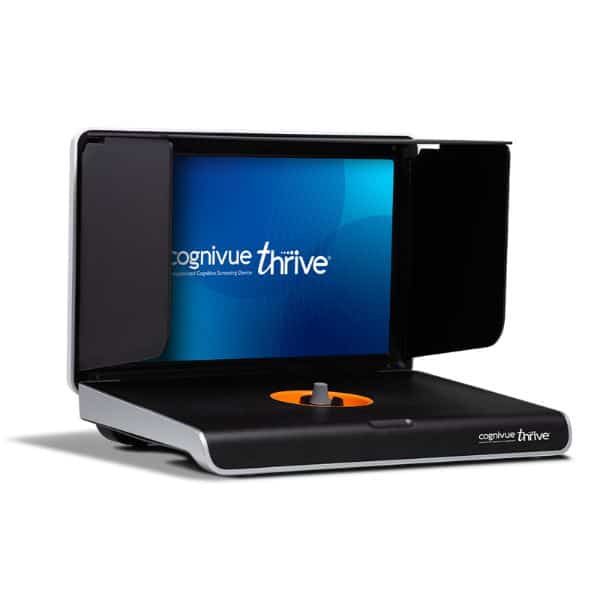
We use Cognivue®, an FDA-cleared computerized cognitive screening device designed to measure cognitive function independently of hearing and language ability.
How long does cognitive screening take?
The screening typically takes just a few minutes and is non-invasive.
Will my results be shared with my doctor?
If results suggest follow-up may be helpful, we encourage sharing them with your physician. We are always happy to collaborate with your healthcare team.
What is the benefit of screening early?
Early insight allows for proactive care. Establishing a baseline makes it easier to notice meaningful changes over time and support long-term brain and hearing health.
Our Commitment
We use cognitive screening to support understanding — not to diagnose, label, or alarm. Our focus is personalized, thoughtful care that respects the whole person.
Take a Proactive Step Toward Hearing & Brain Health
If you live in the Houston area and have noticed increased listening fatigue, difficulty following conversations, or simply want a clearer understanding of your hearing and brain health, we invite you to schedule a Hearing & Brain Health Assessment.
This private, unrushed appointment is designed to provide insight, reassurance, and a personalized plan — not pressure.